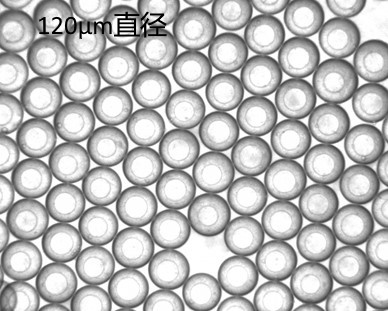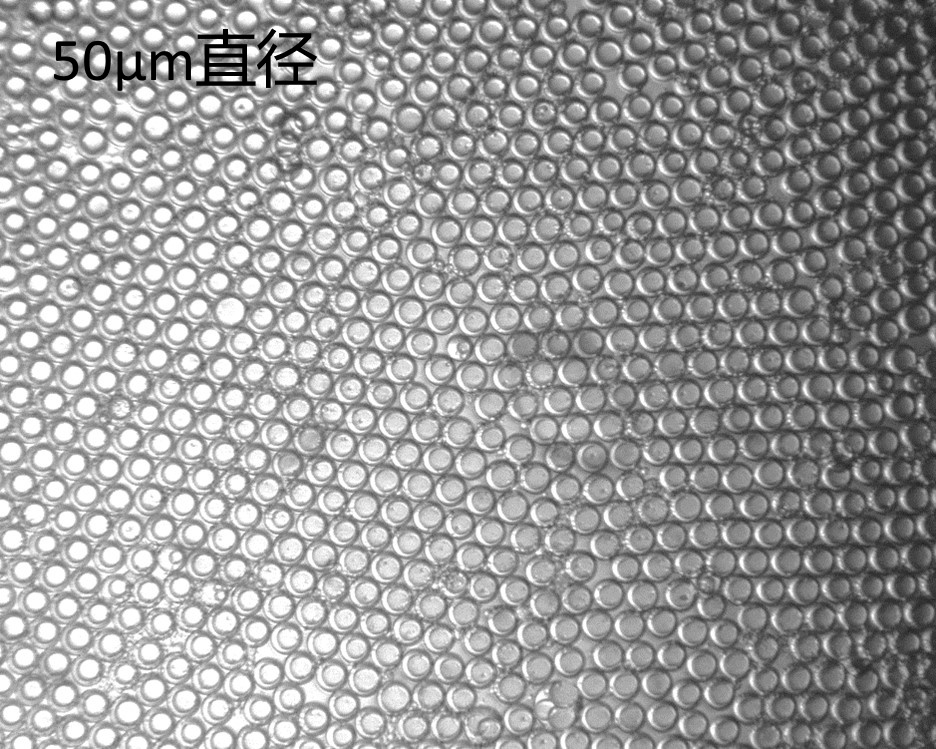


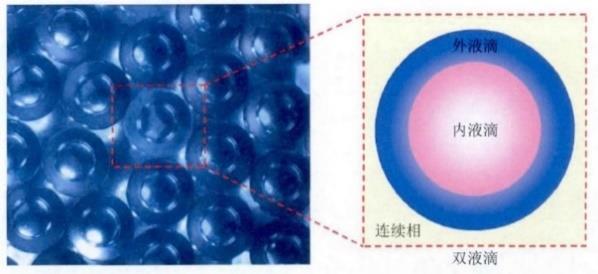
Double-emulsion droplets are complex, multi-layered structures in which one droplet is contained within another; essentially, they consist of smaller droplets dispersed inside larger ones. Because of their ability to encapsulate and protect materials, double-emulsion droplets are widely used in fields such as medicine, cosmetics, food science, chemistry, and cell biology. For instance, they provide controlled environments for cell culture and biological assays, and serve as carriers for the delivery and transport of active ingredients—including enzymes, vitamins, pesticides, exosomes, and liposomes. Common configurations for these droplets include water-in-oil-in-water (W/O/W) and oil-in-water-in-oil (O/W/O) systems. Furthermore, to distinguish between the various internal and external phases—which may differ in composition—they are often denoted using shorthand notations such as W1/O/W2 or O1/W/O2.
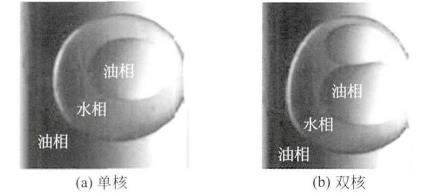
The primary challenges in producing high-quality double-emulsion droplets (microspheres) lie in stabilizing two distinct interfaces throughout the processes of emulsion handling and storage, as well as in the selection of appropriate production tools. During the generation process, emulsion droplets are susceptible to various disturbances, including fluctuations from drive pumps, inaccuracies or drifts in flow sensors, external vibrations, and the presence of impurities. The design of the production device directly influences key parameters such as droplet diameter, production uniformity, and overall process stability. In certain applications—for instance, when the controlled release of encapsulated components is required—it may be necessary to destabilize these interfaces at a specific moment. For other applications, a coaxial tapered glass capillary configuration, which utilizes three-dimensional fluid shear, is the preferred choice.
Currently, common devices used for the preparation of double-emulsion droplets include those made from PDMS, PMMA/COC, glass, or tapered glass capillaries.
PDMS devices are fabricated via soft lithography; they require localized surface treatment to render specific areas either hydrophilic or hydrophobic, and they typically have a limited lifespan of fewer than 10 uses.
PMMA/COC devices are produced through injection molding; they also require localized hydrophilic or hydrophobic surface treatments and, like PDMS devices, are generally limited to fewer than 10 uses.
Glass devices are manufactured using wet etching or laser processing. While they can be reused multiple times, severe channel clogging often necessitates their complete replacement, which entails high costs.
Detachable Double-Emulsion Droplet Capillary Glass Chip
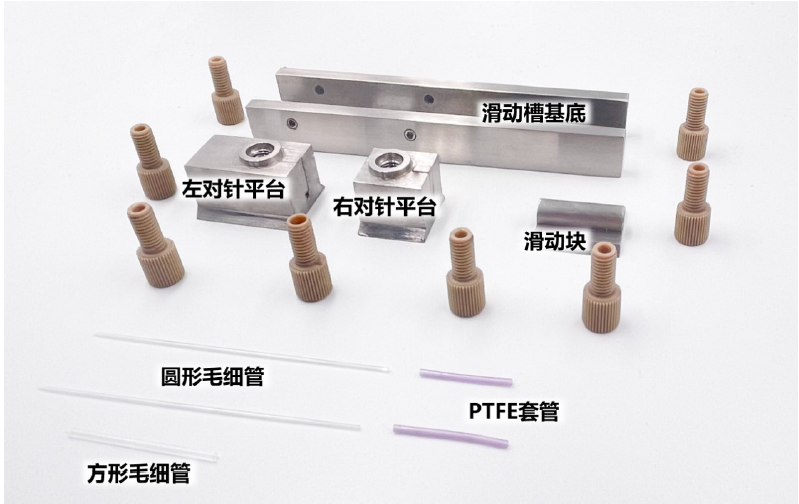
The detachable capillary-based glass chip for generating double emulsions is constructed by fabricating tapered glass tubes—using either a micropipette puller or a heat-stretching process—and mounting them into a metal fixture to create a nested, tip-to-tip configuration. The relative distance between the two tapered glass capillaries can be precisely adjusted.
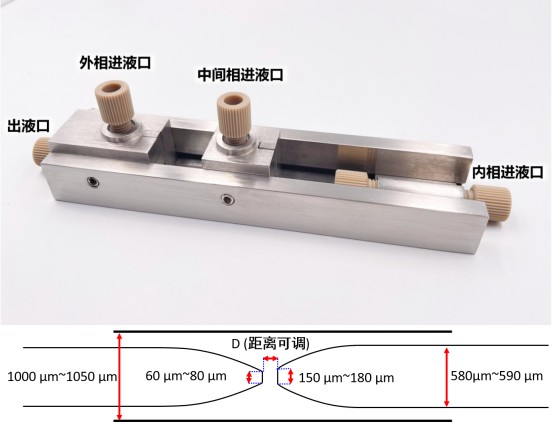
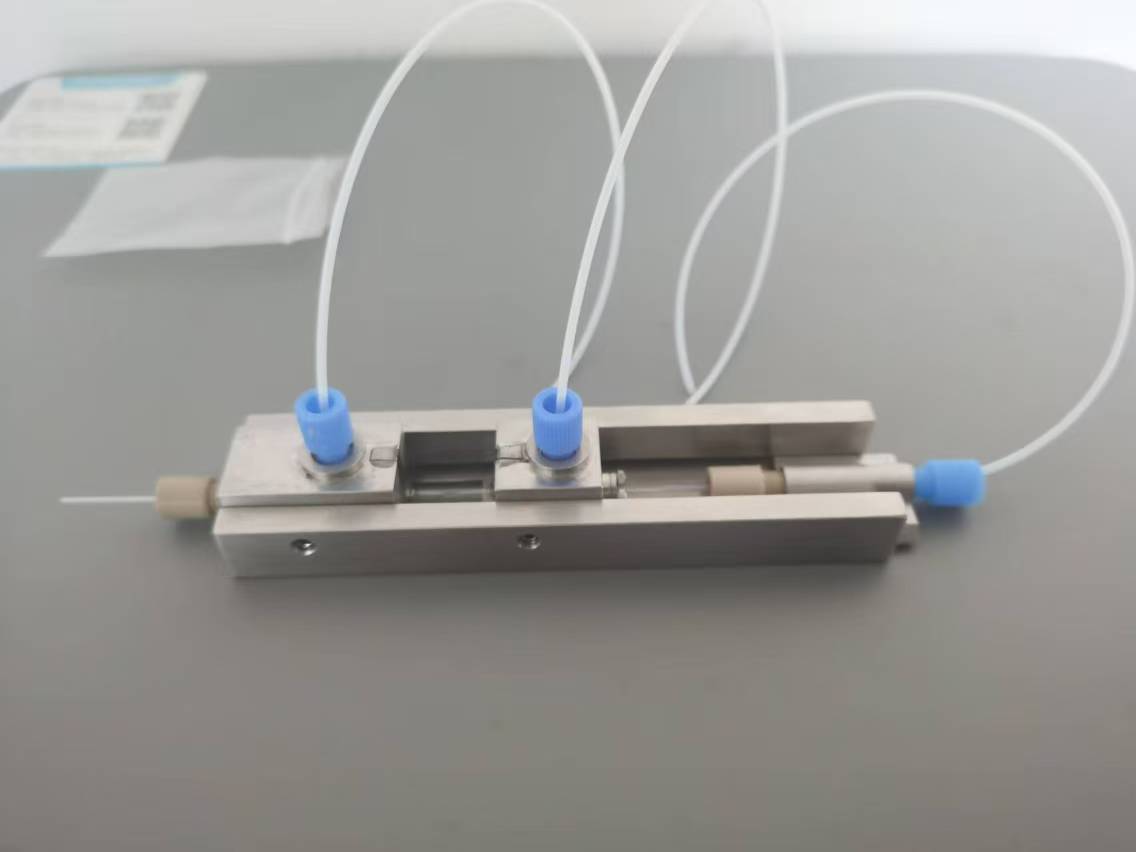
Features of the detachable capillary-based glass chip for double emulsions
● Interchangeable tapered capillaries and square-bore tubes: In the event of severe clogging within the glass channels or tubes, only the specific glass capillary or square-bore tube needs to be replaced, thereby reducing overall replacement costs.
● Coaxial alignment design featuring a nested capillary structure, with adjustable spacing between the tips of the glass capillaries
● The inlet features a 1/4-28 UNF thread, designed to accommodate standard 1/4-28 UNF threaded fittings; it allows for the direct connection of 1/16-inch outer diameter (OD) tubing made of PTFE, FEP, PEEK, or ETFE.
● Capable of producing double-emulsion droplets (microspheres) with diameters ranging from 50 μm to 200 μm
● Includes 5 sets (10 individual units) of imported glass capillaries, available for replacement as needed
● Reusable
● Standard specifications for W/O/W double-emulsion droplets/microspheres
● Optional: Customization available for O/W/O, W/W/O, and O/O/W type
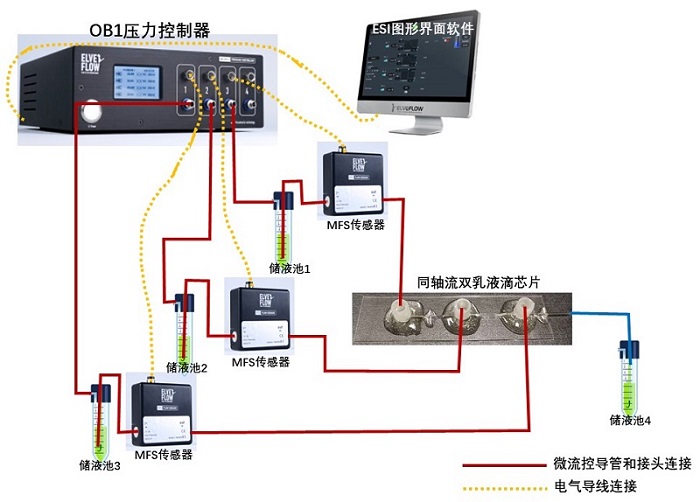
● Compatible with common liquid-driven pumps such as syringe pumps, pressure pumps/constant pressure pumps/pressure controllers, peristaltic pumps, etc.
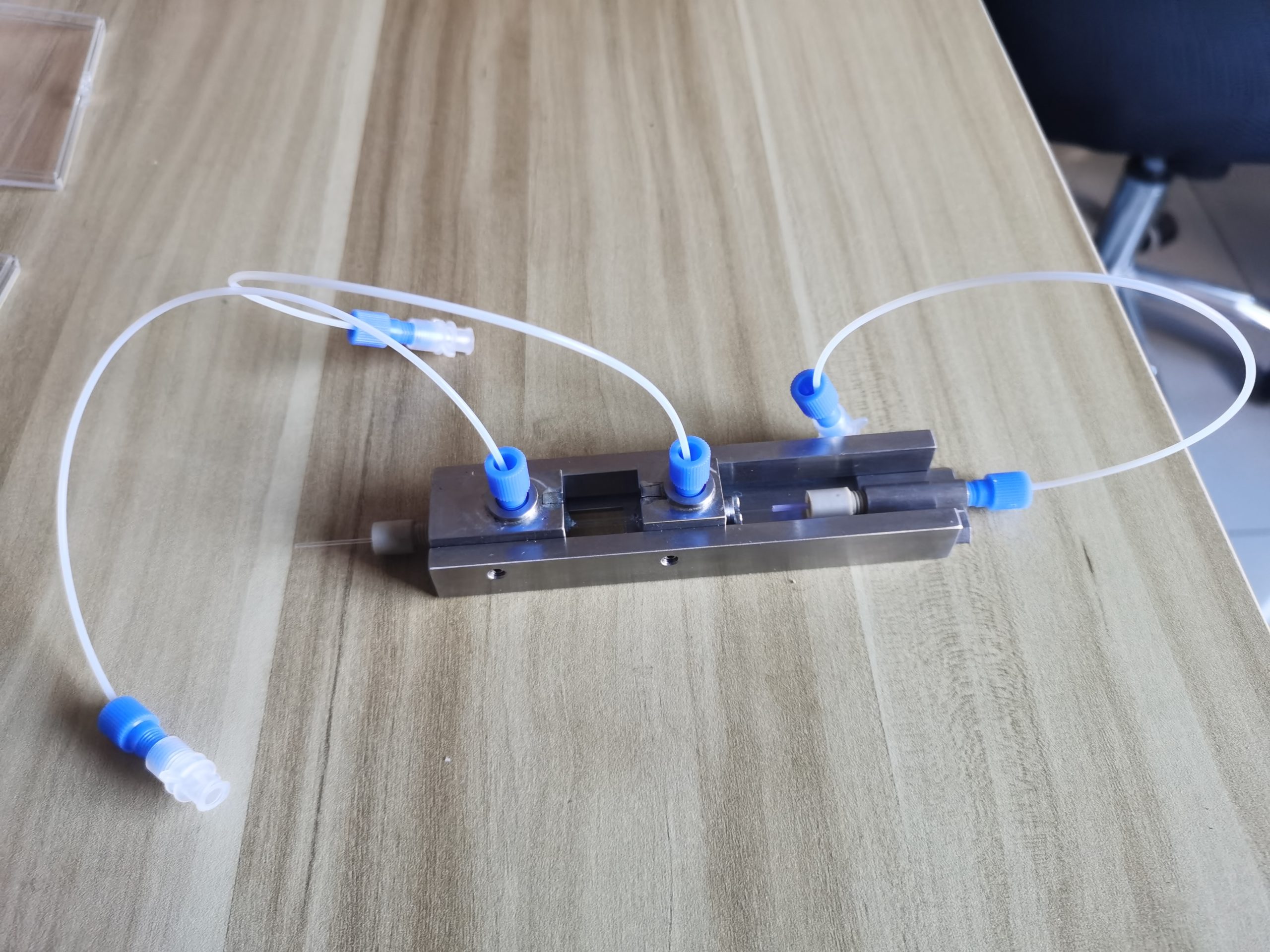
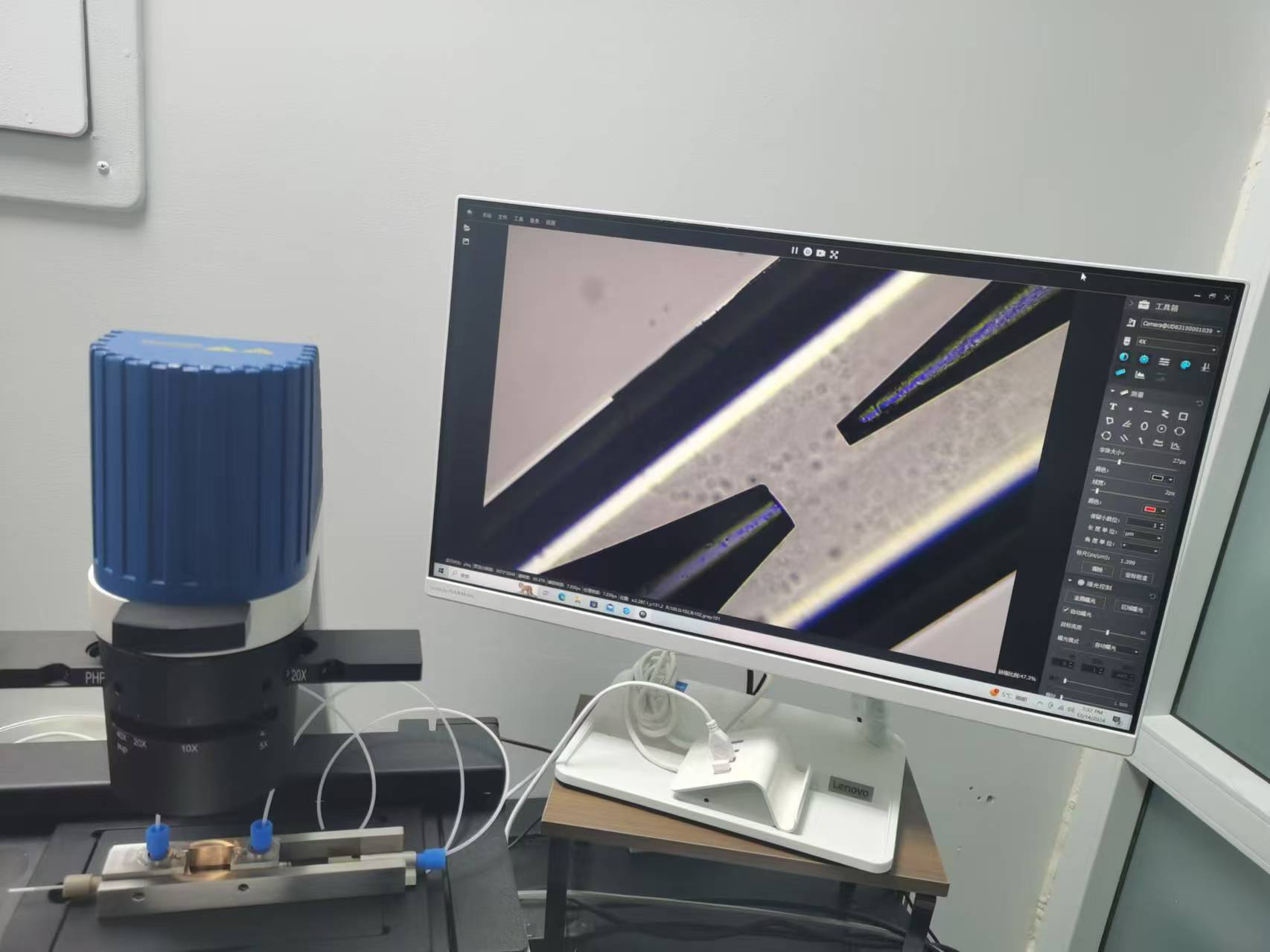
Operating steps:
1. Insert the glass capillary into a PTFE or FEP sleeve, such that 0.5 cm of the capillary tip protrudes from the end.
2. Assemble the glass capillary onto the sliding block.
3. Place the sealing ring into the sealing hole on the right-hand needle-alignment platform, taking care to adjust it carefully;
4. Secure the sealing ring in place with screws.
5. Slide the slider into the metal guide groove; insert the inner-phase glass capillary through the small opening in the sealing ring toward the alignment platform on the right, and then into the interior of the square-bore glass tube.
6. Install the outer-phase glass capillary at the liquid outlet position using the same fixation method, then adjust its relative distance from the inner-phase glass capillary to the appropriate position.
7. Connect 1/16-inch OD PTFE tubing using 1/16″ 1/4-28 UNF threaded fittings.
8. Once assembly is complete, you may begin your experiment.
Example of a reference
Reference Paper
Utada AS, Lorenceau E, Link DR, Kaplan PD, Stone HA, Weitz DA. Monodisperse double emulsions generated from a microcapillary device. Science. 2005 Apr 22;308(5721):537-41. doi: 10.1126/science.1109164.
Yunzhe Ding, Ying Yan, Hanwen Wang, Xinkui Wang*. Preparation of Hollow Cu and CuOx Microspheres with a Hierarchical Structure for Heterogeneous Catalysis. ACS Appl. Mater. Interfaces 2018, 10, 48, 41793–41801. DOI: https://doi.org/10.1021/acsami.8b16246
Tao Hu, Hanwen Wang, Lijing Zhang, Shengyang Tao. Preparation of hollow silver-polymer microspheres with a hierarchical structure for SERS. Applied Surface Science, Volume 490, 1 October 2019, Pages 293-301. DOI: https://doi.org/10.1016/j.apsusc.2019.06.061